Freemason: The Norfolk Neighborhood I Still Miss

There are neighborhoods you live in, and then there are neighborhoods you leave but never quite get over. For me, that’s Freemason.

I used to live in Norfolk’s historic Freemason neighborhood, and I miss it all the time. There’s just something about it that doesn’t feel quite like anywhere else in Hampton Roads. Maybe it’s the cobblestone streets. Maybe it’s the gorgeous old homes tucked behind mature trees and gardens. Maybe it’s the fact that you can be surrounded by centuries of history and then walk a few blocks and find yourself smack in the middle of Downtown Norfolk. Whatever it is, Freemason has a way of getting under your skin - in the best possible way.

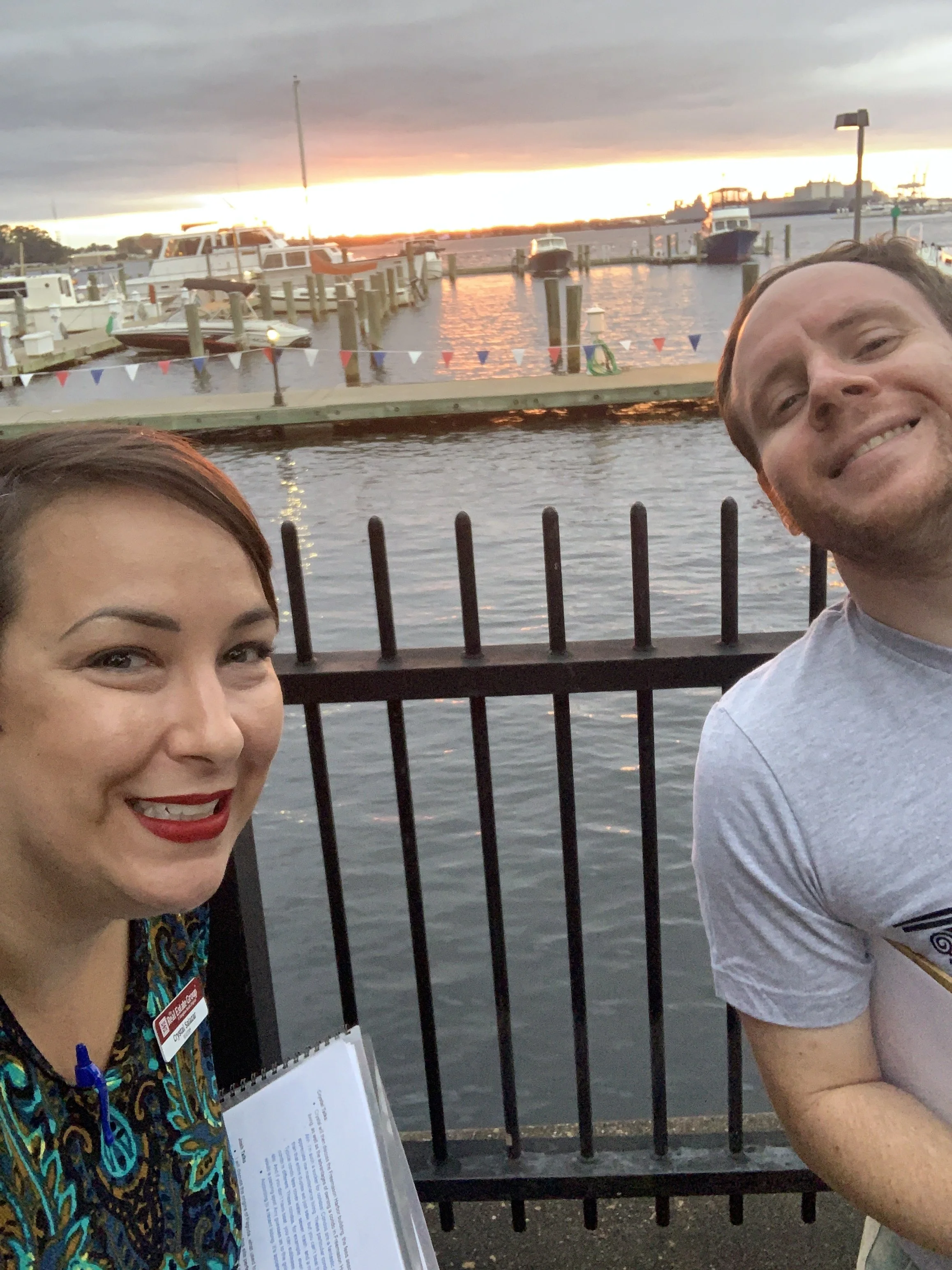
And I got to know this neighborhood from more than just my own front door. Years ago, my friend Josh Weinstein, owner of Norfolk Tour Company, and I co-hosted a “History Meets Real Estate” walking tour through Freemason. Josh brought the fascinating historical details; I brought the Realtor brain that wanted to know what happened to the houses, how the neighborhood evolved, and what all that history means when someone actually wants to own one of them. It was basically our two favorite subjects mashed together into one very nerdy walk - and I loved every minute of it.

Because Freemason has stories. Some of its oldest surviving homes date to the 1790s, with buildings from the 18th, 19th, 20th and 21st centuries all sharing the same relatively tiny patch of Norfolk. The neighborhood has been built, changed, threatened, preserved, restored and reimagined over generations. So when you walk down Freemason Street today, you’re not looking at a neighborhood that was designed to look historic. You’re looking at the real thing.

And walking is kind of the whole point here. Freemason is one of those rare places where leaving your car parked actually makes life better. You can wander down the cobblestones, grab coffee, walk along the water at the Pagoda and Oriental Garden, hop onto the Elizabeth River Trail, head toward Town Point Park, or keep going into Downtown for dinner, a show, a festival or whatever Norfolk has decided to throw that weekend.

But what I miss most about Freemason isn’t really any one restaurant, building or attraction. It’s the feeling of living there.

Freemason gives you city living without always feeling like you’re living in the middle of a city. There are brick sidewalks, shady streets, little pockets of green, boats along the waterfront and homes with enough architectural personality to make my Realtor brain very happy. Then, when you want a little more action, Downtown is right there waiting for you. It’s the kind of neighborhood where an ordinary evening walk can accidentally turn into dinner, drinks, live music or a waterfront festival.

And yes, the cobblestones are ridiculously charming right up until you’re driving over them and suddenly discover every loose object currently residing in your car. Historic charm has a price.

Still, if someone asked me which Norfolk neighborhood has my heart, Freemason would be very, very high on the list. I loved living there. I loved getting to teach people about it. And every time I drive through, I get that tiny little pang of, “Wait…why did we leave again?”

Some neighborhoods are simply places to live. Freemason is a lifestyle - and apparently one I’m still not over.

The 90-Day Plan to Get Your House Ready to Sell

If you’re thinking about selling your house in the next three months, I have one piece of advice: don’t make your listing date the deadline. Make Photo Day the deadline.

Why? Because by the time the photographer shows up, your house needs to look its absolute best - which means the repairs are finished, the clutter is gone, the closets have room to breathe, the landscaping is fresh, and ideally, you’re about 90% packed. Yes, 90%. Stay with me. The beautiful thing about doing it this way is that once your house hits the market, you’re not simultaneously trying to keep it spotless for showings and figure out how on earth you’re going to pack your entire life. You basically already did.

About 90 days before photos, start with the least glamorous but most important step: deciding what is actually coming with you. Before you lovingly wrap and pack something you haven’t touched since 2017, ask yourself whether you even want it in the next house. Go room by room and sort things into four categories: Move, Donate, Sell, and Trash. I like starting with the easy stuff - garages, attics, storage closets, seasonal decorations, guest rooms - before we start making emotional decisions about Grandma’s china. This is also the perfect time to walk through the house with your Realtor and make one master list of repairs and improvements. I generally think of these as Must Do, Nice to Do, and Please Don’t Waste Your Money. By about Day 75, the goal is to have roughly 20–25% of the house packed.

From there, we start making the house feel bigger. Between Days 75 and 60, pack the things you technically could use over the next two months but probably won’t: extra dishes, serving pieces, books, collections, off-season clothing, small appliances, extra linens and most of the stuff hiding in the back of your closets. And speaking of closets: buyers open them! A closet stuffed to the ceiling quietly tells a buyer, “This house doesn’t have enough storage.” A closet that’s about half full says, “LOOK AT ALL THIS SPACE!” By the end of this phase, I’d love to see you around 40% packed - and preferably those boxes have somewhere to go besides becoming a cardboard mountain in the garage.

Around the 60-day mark, it’s time to deal with all those little house quirks you stopped noticing years ago. You know the cabinet handle that wiggles? The door that sticks? The caulk that has seen better days? Now is their moment. Patch holes, touch up paint, replace burned-out bulbs, repair dripping faucets, fix loose hardware and address the small maintenance items buyers tend to notice. Outside, start pruning, weeding, edging, mulching and pressure washing. Inside, begin looking at every room through the camera lens. Does the room really need all that furniture? Is something blocking a beautiful window? Are twelve things sitting on the kitchen counter? We’re creating visual breathing room. By around Day 45, aim for 50–55% packed.

The next two weeks are where we really start packing like you mean it. Extra cookware, office files, décor, toiletries, shoes, coats, toys, craft supplies and anything else you’re unlikely to need before the move can go. I also highly recommend creating a clearly labeled DO NOT PACK zone for medications, important documents, chargers, cleaning supplies, basic tools, pet supplies and everyday necessities. Otherwise, I promise someone will pack the screwdriver and you’ll open seven boxes looking for it. By Day 30, the goal is to be about 65 - 70% packed.

Now we shift from simply getting organized to merchandising the house. During Days 30 through 16, I want to walk through the property again with you and look at it as a product instead of your home. Every room should have an obvious purpose. Furniture may need to move - or disappear altogether. Bedding gets simplified. Bathroom counters get cleared. The refrigerator loses its collection of magnets. Closets get one more edit. The garage and laundry room get some love. We’re not trying to erase every trace that humans live there; we’re simply making it easier for buyers to imagine theirlives there. By Day 16, you should be around 80% packed, and an unexpected showing tomorrow should feel mildly annoying - not like a five-alarm emergency.

Then comes what I affectionately call The “We Don’t Live Here Anymore” Week. Between Days 15 and 8, we’re getting you to that magical 90% mark. Think two-week capsule wardrobes, minimal cookware, minimal toiletries, minimal toys, minimal everything. Pack most countertop appliances, remaining family photos and decorative items. Clear dresser tops and nightstands. Tackle the junk drawer, under the sinks, the medicine cabinet, freezer, coat closet and all those other sneaky places where stuff multiplies when no one is looking.

And then: YOU’RE 90% PACKED. YAY!

The final week is about cleaning and styling - not starting new projects. Have the house professionally deep cleaned. Clean the windows and carpets if needed. Refresh the landscaping. Put out fresh towels and bedding. Hide cords, plungers, toilet brushes, cleaning supplies, extra trash cans and pet clutter. Wipe down appliance fronts and baseboards. Make sure blinds work and lightbulbs match. And please, for the love of real estate, do not decide four days before photos that now would be a fun time to repaint the bathroom vanity. The projects are DONE.

The day or two before photos, do one final walkthrough as if you’re seeing the house online for the first time. Open the blinds. Fluff the pillows. Smooth the bedding. Put the toilet lids down. Clear the counters. Hide the cords. Move cars out of the driveway. Put away trash cans, hoses, pet bowls and bath mats. Sweep the porch. Straighten the patio furniture. Add a little fresh greenery if the room needs it - but no, we do not need seventeen bowls of fake lemons.

Then the photographer arrives.

And instead of standing there thinking, “Oh my gosh, now we have to pack this entire house,” you get to look around and think:

“We basically already did.”

That’s the whole point of starting 90 days before Photo Day. Selling a house already comes with enough moving parts. If we can spread the work over three months, make thoughtful decisions instead of panicked ones, and get most of the move out of the way before buyers ever walk through the door, the entire process becomes a whole lot easier.

And if you’re thinking about selling sometime in the next 90 days? You don’t have to have everything figured out yet. That’s what I’m here for. We’ll make the plan, tackle it one step at a time, and get you all the way to Photo Day - and whatever address comes next.

The Benefits of Working With Your Friends

Cough cough: it’s me. I’m the friend.

There’s an old piece of advice that says you should never mix business and friendship. And listen, there are situations where this is probably excellent advice. Starting a restaurant together because you both “love brunch”? Dangerous. Going 50/50 on a boat? Absolutely not. Agreeing to flip a house after watching three episodes of HGTV and drinking a bottle of wine? Please put the calculator down.

But when it comes to real estate, I’d like to respectfully submit a counterargument: sometimes working with your friend is actually the BEST part.

Especially when your friend happens to be a licensed real estate professional who knows how to read a contract, analyze comparable sales, negotiate an inspection, and talk you down when you become emotionally attached to a house because it has a cute pantry.

Cough cough. Hi. It’s me. I’m the friend.

One of the biggest advantages is that we don’t have to start from scratch. I might already know you’ve been talking about moving for three years. I know your dog is basically your firstborn child, so a fenced backyard is not technically “required” but is absolutely required. I might even remember that one time you mentioned wanting a screened-in porch eight months ago.

That stuff matters because real estate isn’t really about bedrooms, bathrooms, and square footage. Those are just the things we put into the search boxes. The bigger question is: How do you actually want to live? And your friends usually have a pretty good head start on the answer.

You also don’t have to pretend with me. If I start explaining something and you have no idea what I’m talking about, you can just say, “Crystal. What the hell does that mean?”

PERFECT.

Ask me the weird question. Ask me the basic question. Ask me the question you already asked three weeks ago and forgot the answer to. There are no bonus points at closing for pretending you understood title insurance the first time.

And please tell me the real budget. Not the “technically the lender says we can afford this” budget. I mean, “Yes, we could spend $600,000, but then we could never travel again and I refuse to live like that.”

GOOD. Tell me that.

Because I know this isn’t just a transaction for you. You’re figuring out where Thanksgiving happens. Whether you have room for the dog. Whether your parents can comfortably visit. Whether you can still afford vacations and ridiculous things from HomeGoods after the mortgage payment clears.

When I already care about you as a human being, I’m not just trying to get you to the closing table. I want the decision to make sense for your actual life.

And yes, I understand why working with a friend can feel a little scary. What if you don’t like my advice? What if you decide not to buy? What if you talk to me and decide I’m not the right Realtor for you?

You are always allowed to make the decision that’s right for you. A good friend shouldn’t pressure you into hiring them, and a good real estate agent shouldn’t either.

Ultimately, the biggest benefit is pretty simple: trust.

Buying or selling a home means letting someone into a surprisingly vulnerable part of your life. They’re going to know your finances, your stress level, your priorities, your family dynamics, and your “please don’t tell anyone we actually hate this kitchen” opinions.

So sometimes, the person you already trust also happens to be really good at helping people buy and sell houses.

Convenient, right?

I get to hear what you’re dreaming about, help you make a plan, navigate the weird parts, and hopefully turn one of those goals into an address.

And then I get invited to the housewarming party.

Because remember: I’m not just your Realtor.

I’m your friend.

And I know where you live now.

Your Real Estate Cheerleader,

Crystal

So, What’s the Deal With Ridgely Manor in Virginia Beach?

There are certain neighborhoods in Virginia Beach that make you drive through them and think, Wait. Where exactly am I? Ridgely Manor is one of them.

Tucked into the northern part of Virginia Beach near Lake Smith, Ridgely Manor somehow manages to feel peaceful and tucked away while still being close to approximately… everything. You get trees. You get water. You get walking trails. And then you remember IKEA, the airport, Town Center, military bases, shopping, restaurants and major highways are all nearby. Basically: nature, but with errands. My favorite kind.

One thing that's helpful to know about Ridgely Manor is that it isn't just one collection of identical houses marching politely down the street. It's a larger planned community made up of several smaller neighborhoods and associations, which means you'll find a pretty wide variety of homes here - from condos and townhomes to detached homes and some seriously gorgeous properties along Lake Smith. Translation: “I want Ridgely Manor” can mean a lot of different things. Want a condo where somebody else worries about the landscaping? We can talk. Want a traditional detached house? Also possible. Want a beautiful house near the water where you dramatically sip coffee while staring into the distance and contemplating your empire? Ridgely Manor would like a word.

One of my favorite things about the neighborhood, though, is that it actually gives you a reason to go outside. Ridgely Manor has miles of walking paths winding through the community and along Lake Smith, with ponds, bridges, greenery and water views sprinkled throughout. It's the kind of setup that makes you think, I should become a person who takes an evening walk. Will you actually take the walk? That is between you and your Apple Watch. But the option is there, and that's what matters.

Depending on which section of Ridgely Manor you're in, you'll also find different community amenities and services, which can include things like pools, clubhouses, maintained grounds, playgrounds, tennis courts and walking paths. Because there are multiple associations within Ridgely Manor, exactly what's included- and exactly what you pay - depends on the property. This is where your friendly neighborhood Realtor enters the chat and says: READ. THE. CONDO. DOCS. I'll help. Obviously.

And then there's the location. Ridgely Manor sits in the 23455 area of Virginia Beach near the Norfolk line, which means you can get to Norfolk International Airport, Town Center, military installations, shopping, restaurants and major highways without embarking on a full Oregon Trail expedition. And despite being firmly in civilization, the neighborhood doesn't feel like someone dropped your house into the middle of a giant commercial corridor. That's the magic trick. You can leave your peaceful little neighborhood, get groceries, buy seventeen things you did not need at IKEA, accidentally spend $74 at HomeGoods, and be back home before you've had enough time to regret your choices.

If I had to describe the Ridgely Manor vibe in one sentence, it would probably be: “I would like some trees and a little serenity, please, but I also need Target to remain reasonably accessible.” It's established without feeling stuffy, landscaped without feeling sterile, and there's enough water and greenery around you to make the neighborhood feel a little removed from the hustle and bustle without actually being removed from the things you need.

The variety of homes also means there isn't really one singular “Ridgely Manor buyer.” You could be a first-time buyer, someone downsizing, a military household, someone craving lower-maintenance living, someone who wants more space, or someone who simply wants to be closer to the water. Or perhaps your sole housing requirement is, “I need a nice route to walk my dog while listening to true-crime podcasts.” I respect that person.

And truthfully, that's probably what I like most about Ridgely Manor. It doesn't make you choose between “peaceful neighborhood surrounded by greenery” and “I need to be able to get to civilization without packing snacks for the journey.” You can have a little bit of both.

Trees? Check.

Trails? Check.

Water views? Check.

Reasonable proximity to Target?

Arguably the most important check.

So if Ridgely Manor hasn't been on your Virginia Beach neighborhood radar, perhaps it deserves a little drive-through. Just don't blame me when you suddenly find yourself imagining an entirely new life where you take evening walks, know all your neighbors' dogs by name and become the kind of person who says things like, “I'm just going to pop over to the clubhouse.”

Frankly, I think you could pull it off.

Your Real Estate Cheerleader,

Crystal

The Better Question Isn’t “What’s the Rate?” It’s “What Does Your Life Need?”

I’m going to say something that may make the internet’s armchair economists twitch a little: your life does not care what mortgage rates are doing. Your job transfer doesn’t care. Your third child sharing a bedroom with the Peloton definitely doesn’t care. Your knees don’t care that you have a fabulous interest rate on a three-story townhouse. And the two adults attempting to work from home at the same kitchen table really don’t care.

Life keeps happening whether mortgage rates are 3%, 5%, 6.5%, or something that makes us all collectively mutter an expletive under our breath. Which is why I think we’ve been asking the wrong question. Instead of “What’s the interest rate?” maybe we should be asking: “What does my life need right now?”

Yes, Interest Rates Matter

Before someone forwards this to their financially responsible uncle with the subject line “LOOK WHAT THIS REALTOR® IS TELLING PEOPLE,” let me clarify: of course interest rates matter. They affect your monthly payment, your purchasing power, and whether a particular house comfortably fits your budget or makes you survive exclusively on ramen noodles and anxiety. I’m absolutely not suggesting that you ignore the math. I’m suggesting that the math is only one piece of the decision.

Sometimes people aren’t waiting because buying doesn’t make financial sense. They’re waiting because they’ve picked an arbitrary number - usually 5% - and decided that life can resume once mortgage rates cooperate. And, friends… waiting for 5% isn’t really a plan. Nobody knows exactly when rates will hit 5%, how long they’ll stay there, or what home prices, inventory, and competition will look like when they do. You’re essentially letting the Federal Reserve become your life coach, and I’m not convinced Jerome Powell needs that much authority over whether you finally get a second bathroom.

A Great Interest Rate Doesn’t Make the Wrong House the Right House

Somewhere in Hampton Roads right now, someone is sitting inside a house with a gorgeous 2.875% mortgage rate…and the house no longer works for them. Maybe they bought it before they had kids. Maybe the kids have moved out and they’re maintaining 3,000 square feet they don’t need. Maybe their parents are getting older and they want to live closer. Maybe stairs have become an issue. Maybe their commute is slowly stealing their will to live. Or maybe they just looked around one Tuesday morning and realized: this house doesn’t fit my life anymore.

I understand the hesitation to give up a historically low rate. A 3% mortgage is an incredibly valuable thing to have. But a cheap mortgage on the wrong house can still be expensive. There is a cost to staying, too. Sometimes it’s financial - maintenance, utilities, commuting, repairs, or maintaining far more house than you need. Sometimes it’s opportunity. And sometimes it’s simply spending another three years living somewhere that no longer works because you’re waiting for an economic condition you cannot control.

Your home is a financial asset, but it’s also where you actually live your life. It’s your commute, your neighborhood, your stairs, your yard, your home office, your dinner table, and the place your friends and family gather. So instead of asking “What’s the rate?” I’d rather ask: What isn’t working anymore? What would make your everyday life better? What are you trying to move toward?

But What If Rates Do Drop to 5%?

Great! I will happily throw confetti. But you won’t be the only person who notices. There are plenty of would-be buyers sitting on the sidelines saying, “I’ll buy when rates come down.” If rates fall significantly, more buyers may enter the market, which could mean more competition, fewer seller concessions, and less negotiating power.

Does that mean it will definitely happen? Nope. That’s exactly the point: you cannot perfectly time this. A 5% interest rate does not automatically equal a better real estate transaction. A buyer at 6.5% with plenty of homes to choose from and room to negotiate may ultimately have a better buying experience than someone at 5% competing against six other offers. The interest rate is important. It just isn’t the whole story.

So, What Does Your Life Need?

I don’t think you should buy a house simply because interest rates are good, and I don’t think you should refuse to buy one simply because interest rates are bad. If moving would drain your savings, stretch your monthly budget beyond what feels comfortable, or leave you financially vulnerable, the answer may very well be: stay put. But if you can comfortably afford the move, the house solves an actual problem, and your life is ready for something different, I’m not sure I’d put that life on hold waiting for 5%.

Interest rates should inform your decision. They shouldn’t make it for you. Buy because your life has changed. Sell because your life has changed. Move because the home you’re living in no longer fits the life you’re actually living. Then let your lender, your REALTOR®, and - most importantly - your own financial reality determine whether the numbers support that move.

Because the goal isn’t to win the mortgage-rate lottery. The goal is to live in a home that works for your life.

And if you’re somewhere in Hampton Roads wondering whether your life is telling you it’s time for a move - even while mortgage rates are telling you to sit down and behave - let’s talk about it. We can figure out the math, and then we can figure out what actually makes sense for you.