

Polybutylene Pipes: Before You Panic, Read This.
/If you've looked at homes in Hampton Roads for any length of time, you've probably heard someone utter these four terrifying words:
"It has polybutylene pipes."
Cue the dramatic music.
Suddenly, buyers start imagining burst pipes, flooded living rooms, and dollar signs flying out the window. But before you cross a house off your list, let's talk about what polybutylene plumbing actually is - and more importantly, what it means for you. Because information beats fear every single time.
So... What Is Polybutylene?
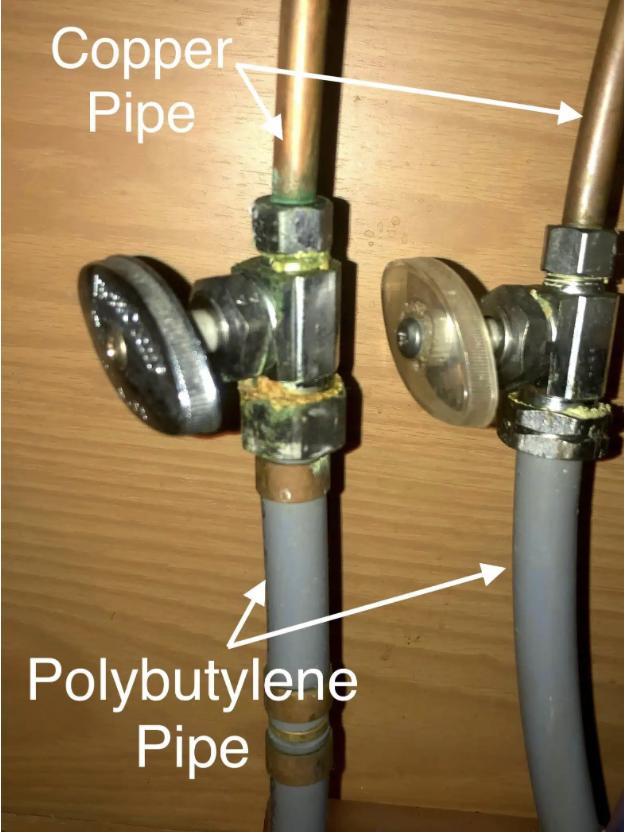
Polybutylene (often called "PB") is a gray plastic plumbing pipe that was installed in millions of homes between approximately 1978 and 1995. At the time, it was considered an affordable alternative to copper and was used in an estimated 10 million homes and buildings throughout North America.
Unfortunately, it didn't age the way everyone hoped. Research found that chlorine and other disinfectants commonly found in municipal water supplies can cause the material to deteriorate from the inside out. The frustrating part? The outside of the pipe can look perfectly healthy while the inside is slowly weakening.
Imagine a chocolate Easter bunny. Looks solid. Until it isn't.
But... People Live with These Pipes Every Day.
Here's the part that often gets left out of the conversation. There are still countless homeowners living with polybutylene plumbing without a single issue. The problem isn't that every polybutylene pipe leaks. It's that no one can reliably predict which one will leak next.
One of my favorite quotes from a local plumber is:
"I've never met a pipe that didn't leak."
Every plumbing material has a lifespan. Copper develops pinhole leaks. CPVC can become brittle over time. Even modern PEX can fail if it's installed incorrectly. The challenge with polybutylene is that its failures are notoriously difficult to predict, which makes insurance companies, buyers, and home inspectors pay a little closer attention.
Is It a Dealbreaker?
Maybe. Maybe not. I've helped buyers purchase homes with polybutylene plumbing. I've also advised buyers to walk away. But the pipes themselves rarely make the decision. The whole picture does.
Here are the questions I usually ask:
Has the home ever had plumbing leaks?
Has any of the plumbing already been replaced?
Can the buyer comfortably budget for a future repipe if needed?
Is the home priced appropriately?
Is the seller willing to negotiate?
What does the homeowner's insurance company say?
Real estate isn't about finding the perfect house. It's about understanding the trade-offs and deciding whether they're worth it.
What If You Already Own a Home with Polybutylene?
First... Don't panic. Seriously.
If you've lived in your home for years without an issue, this article isn't meant to convince you your ceiling is about to cave in. Instead, use it as motivation to have a plan.
Here's what I'd recommend:
Know where your main water shutoff is. (Every homeowner should know this anyway.)
Talk with your insurance company. Some companies insure homes with polybutylene without issue. Others may charge more or require replacement before issuing a policy.
Keep an eye on your water bill. A sudden increase can sometimes point to a hidden leak.
Watch for warning signs like damp drywall, musty smells, stained ceilings, or moisture in the crawlspace.
Start a "future house projects" fund. Just like roofs, HVAC systems, and water heaters eventually wear out, a repipe may simply become another project to tackle down the road.
Get a quote before you need one. Knowing the approximate cost of replacing the plumbing takes away a lot of the fear.
Living with polybutylene isn't about expecting disaster. It's about understanding the risk and having a plan if the day ever comes.
A Few Fun (Okay... Slightly Terrifying) Facts
Polybutylene plumbing was commonly installed from 1978 through 1995.
An estimated 10 million homes and buildings originally used it.
One of the largest class-action lawsuits in U.S. history involved polybutylene plumbing and resulted in a settlement of roughly $1 billion.
Many plumbers recommend replacing polybutylene with modern PEX plumbing when the timing and budget make sense.
My Take
One of my jobs as a Realtor is helping clients separate problems from dealbreakers. Those aren't always the same thing.
A home inspection is full of items that sound scary:
Polybutylene plumbing.
Aluminum wiring.
Older roofs.
Aging HVAC systems.
Cast iron drain lines.
Very few homes are perfect. The goal is to understand what you're buying, know what it could cost in the future, and decide whether that home still helps you reach your goals.
Sometimes polybutylene is a reason to negotiate. Sometimes it's a reason to budget. And yes, sometimes it's a reason to walk away. The important thing is that you're making that decision based on information—not fear. Because that's how good real estate decisions are made.